Make the whole cycle visible
Map the full path from development decision to opening day, across every function holding a step, a dependency, or an approval, and locate where the time actually accumulates.
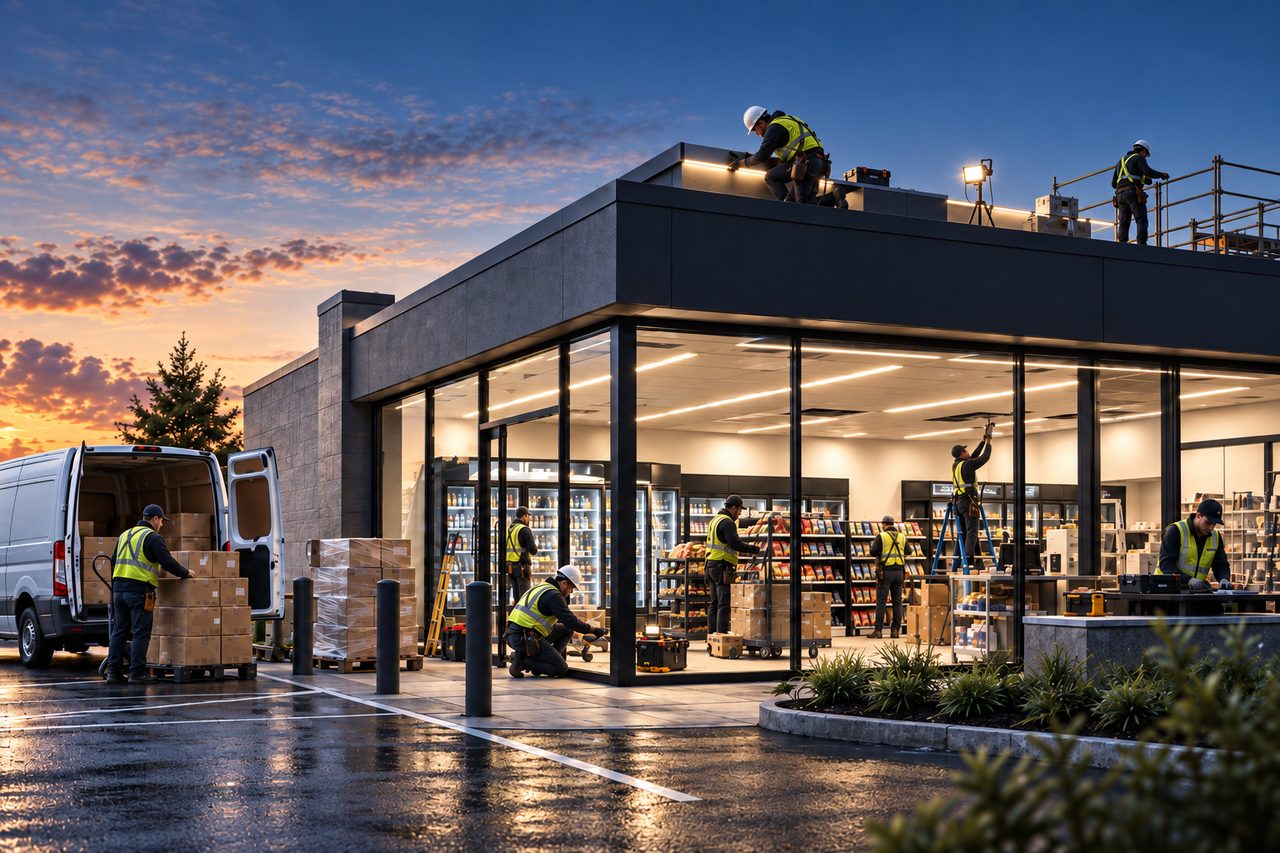
Our client is a convenience-store operator, running a continuous programme of new store openings across Thailand.
Opening a store took months, and a store earns nothing until the day it trades. At rollout scale that made every week of cycle time capital the business had already committed and could not yet recover. Design approvals and construction each looked efficient measured on their own. The delay was in the order they ran in: the sequence had been inherited rather than designed, and steps waited on each other that did not have to. Bold Group examined the cycle end to end with the client team, challenged the sequence, and co-designed a revised process holding cost and quality fixed.
A business constraint, the decision it forced, and what Bold Group contributed to that decision.
The client put the redesigned sequence into use. The projection of its effect is the client team's own, and no measured result has been reported back.
Developing and opening a store took several months, and a store could begin trading only once it opened. Delays in the opening cycle therefore affected the pace at which the network could expand.
Design, approvals, construction and fit-out were managed as separate stages in an inherited sequence. The question was not whether those activities mattered, but which dependencies genuinely required one activity to wait for another.
Which of these steps genuinely have to wait for the one before, and what becomes possible if the rest stop waiting?
The decision was to rethink the sequence under the client’s stated cost and quality conditions, rather than to make each stage faster inside the order it had always run in.
Map the full path from development decision to opening day, across every function holding a step, a dependency, or an approval, and locate where the time actually accumulates.
Take each step in turn and establish whether it genuinely depends on the one before it, or whether the order is simply the one the organization inherited and stopped questioning.
Rebuild sequencing and coordination with the client team, holding the stated cost and quality conditions fixed rather than trading them for speed.
Facilitated the end-to-end examination, challenged the sequence the organization had inherited, and co-designed the revised process with the client team.
Supplied the operational knowledge, judged what was feasible, produced the impact projection, and retained authority over implementation.
The client project team estimated that, if fully implemented, the redesigned process could reduce cycle time by approximately 67% compared with the original process — measured as elapsed time from the development decision to the store trading — while holding the stated cost and quality conditions. The client put the redesigned sequence into use. No measured cycle time has been reported back.
01The 67% figure is a feasibility projection produced by the client project team using their own operational knowledge. It is not a measured or realized result.
02Bold Group facilitated and co-designed. The client supplied operational knowledge, judged feasibility, and retained implementation authority.
03Published anonymously. This case should not be read as a guarantee that the same method or figure applies elsewhere.