Find the moment, not the condition
Establish exactly when the risk arises. It was not the diagnosis; it was the few minutes a caretaker has to step away for registration, payment, or rest.
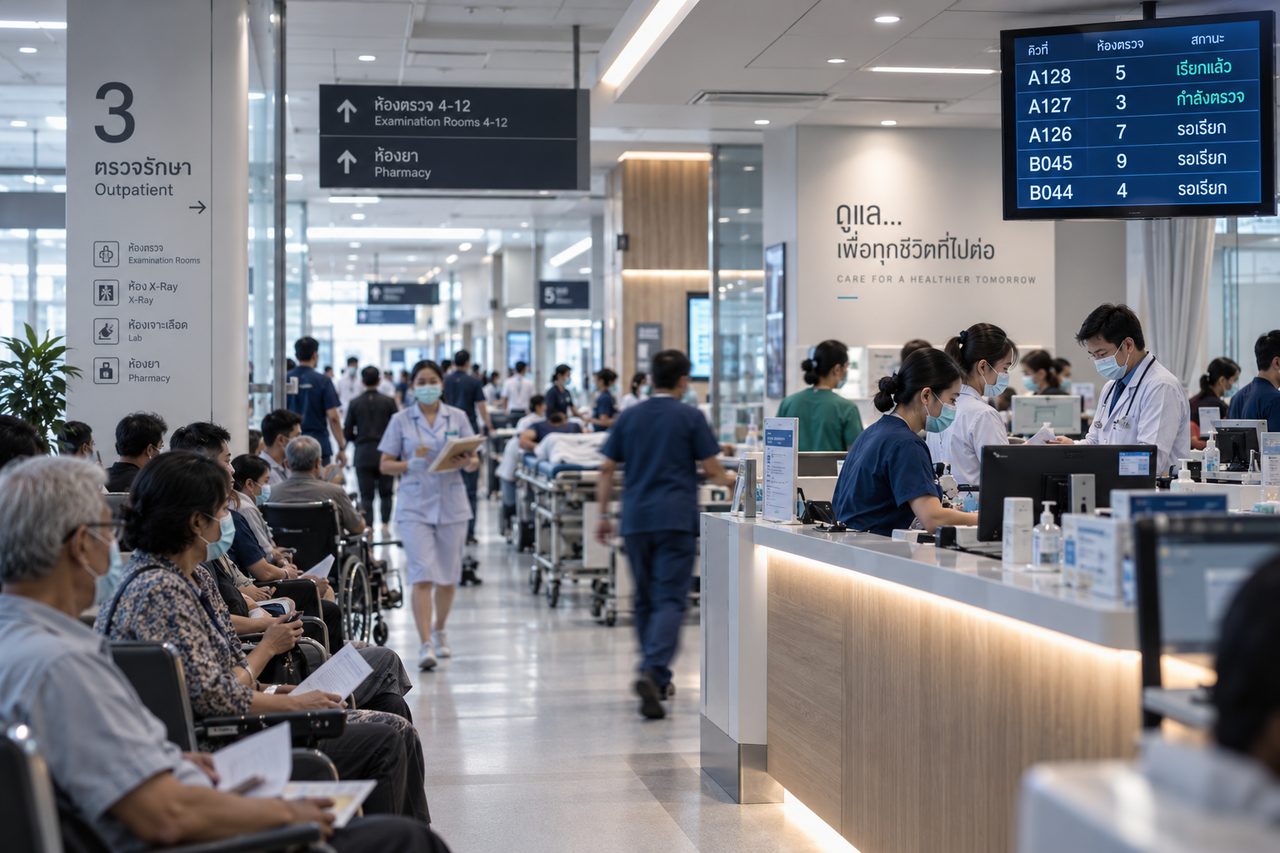
Our client is a public hospital, in the outpatient clinic that treats people living with Alzheimer's disease.
An Alzheimer outpatient looks like anyone else in a hospital corridor. The risk arrived in ordinary moments: a family member steps away to pay a bill, register, or use the toilet, the patient does not wait, and at the main door nobody can tell him from a visitor on their way out. A nurse had proposed GPS wristbands with mobile SIMs. In a public hospital serving low-income families, neither the hospital nor the families could carry the equipment cost or the monthly subscription, so nothing had been done at all. The design did not make the patient identifiable. It changed where he waits.
A business constraint, the decision it forced, and what Bold Group contributed to that decision.
This case describes a design. It has not been shown to be implemented, and no operating result is claimed.
An Alzheimer outpatient is indistinguishable from any other person in a hospital corridor. The risk arrives in ordinary moments — a family member steps away to pay a bill or register — and at the main door nobody can tell the patient from a visitor leaving.
The proposal on the table was a GPS wristband, which locates a patient who has already left, and which carried a recurring cost neither the hospital nor the families could take on. The answer was unavailable as well as late.
If nobody can afford a device, what has to change about the place and the handover so that a patient cannot leave unnoticed?
The decision was to change where the patient waits and how the handover works, rather than to track a patient who has already gone.
Establish exactly when the risk arises. It was not the diagnosis; it was the few minutes a caretaker has to step away for registration, payment, or rest.
Establish what tracking would actually have achieved, and compare it with what the situation required, which was that nobody at the door could tell an outpatient from a visitor.
Build the answer from the ward, the nurses, a card, and a text message, so it carries no equipment cost and nothing to renew.
Facilitated the design with the ward, working from the constraint the ward stated rather than from the answer already on the table.
Under the proposed design, ward staff would operate the handover and the release check, and the hospital owns whether it holds under real conditions and real staffing.
Bold Group facilitated the design with the ward: the caregiver hands the patient to a nurse inside the ward and takes an identification card in return, is messaged when treatment ends, and the patient is released only to the card holder. The design uses what the clinic already has.
01No cost saving, incident rate, or adoption figure is claimed for this engagement.
02This is a design. Implementation and any patient-safety outcome are not established.
03Described anonymously, without identifying the hospital or any patient.