Follow the cost to its owner
Establish who actually pays for the damage, and whether that party is the one who caused it.
Our client is a manufacturer of prefabricated staircases, selling to housing developers who install them on site.
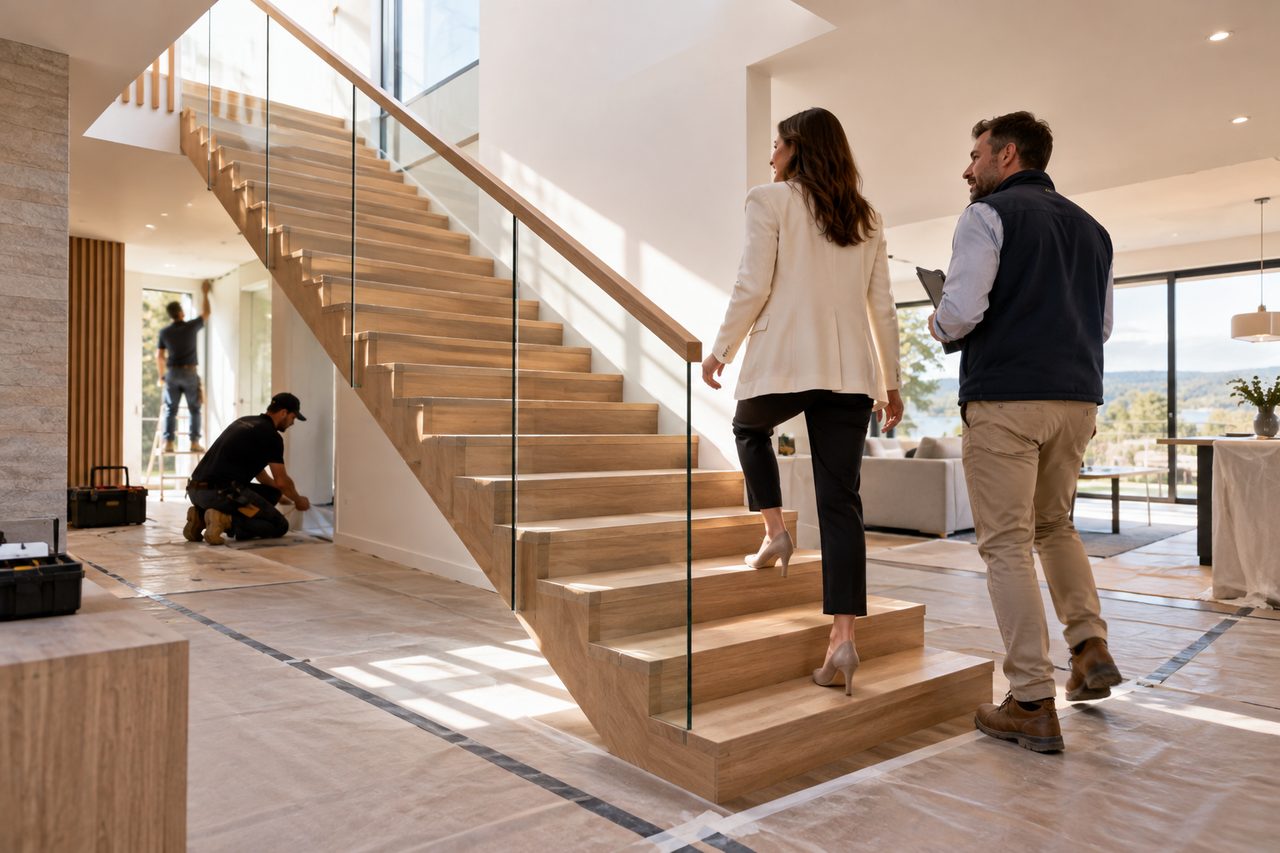
The staircase was finished, installed, and then left exposed for the rest of the build. Sales staff and prospective owners walked the house in heels. Subcontractors returning to fix walls worked over it with their tools. Every scratch came back to the factory, which sent staff to replace the panel and absorbed the cost, for damage it had not caused. What was failing was the window between installation and handover, and protecting a finished surface through that kind of window is a problem the automotive industry solved long ago.
A business constraint, the decision it forced, and what Bold Group contributed to that decision.
This case describes a design. It has not been shown to be implemented, and no operating result is claimed.
The staircase was finished, installed, then left exposed for the rest of the build. Prospective owners walked it in heels; subcontractors returning to other work went over it with their tools. Every scratch returned to the factory, which replaced the panel and absorbed the cost of damage it had not caused.
Damage after installation was treated as the site's or the buyer's to deal with, not the factory's to prevent.
If the product is not defective when it leaves and not defective when it is installed, what are we actually being asked to fix?
The decision was to protect the finished surface through the exposure period, rather than to keep replacing what that period damaged.
Establish who actually pays for the damage, and whether that party is the one who caused it.
Locate the period between installation and handover when a finished surface sits unprotected among trades, inspections, and visitors, and treat that window as the thing being designed for.
Protecting a finished surface through handling, transport, and rough environments is routine in automotive. The answer was adapted from an industry that had solved it rather than invented inside construction.
Followed the cost to the party actually paying it, located the exposure window between installation and handover, and looked to an industry that had already solved surface protection.
Developed the wrap with its own film supplier, and owns that relationship, that product, and the decision to carry it into production.
The manufacturer worked with a film supplier from the automotive industry to develop a polymer wrap for the wooden panel. It stays on through construction and is torn off at the last step before the house transfers to its owner.
01No defect-rate or construction-schedule figure is claimed for this engagement.
02This is a design. Production adoption and any change in replacement cost are not established.
03The manufacturer developed the wrap with its own film supplier. That relationship and that product are theirs.